





How to Handle a Price Objection on a B2B Sales Call
"Too expensive" is a conclusion, not a reason. The four causes behind a price objection, and how to answer each one without discounting.

Every rep who has ever quoted a number has heard some version of "that's too expensive." A price objection is the most common thing a buyer says out loud, and it is also the least literal. Handled badly it turns into a discount you did not need to give. Handled well it is the most useful moment in the call, because it is the first time the buyer tells you what they actually believe your product is worth.
Revyn puts a rep in front of a live AI buyer that objects, then scores the call.
Try a practice call#What "too expensive" actually means
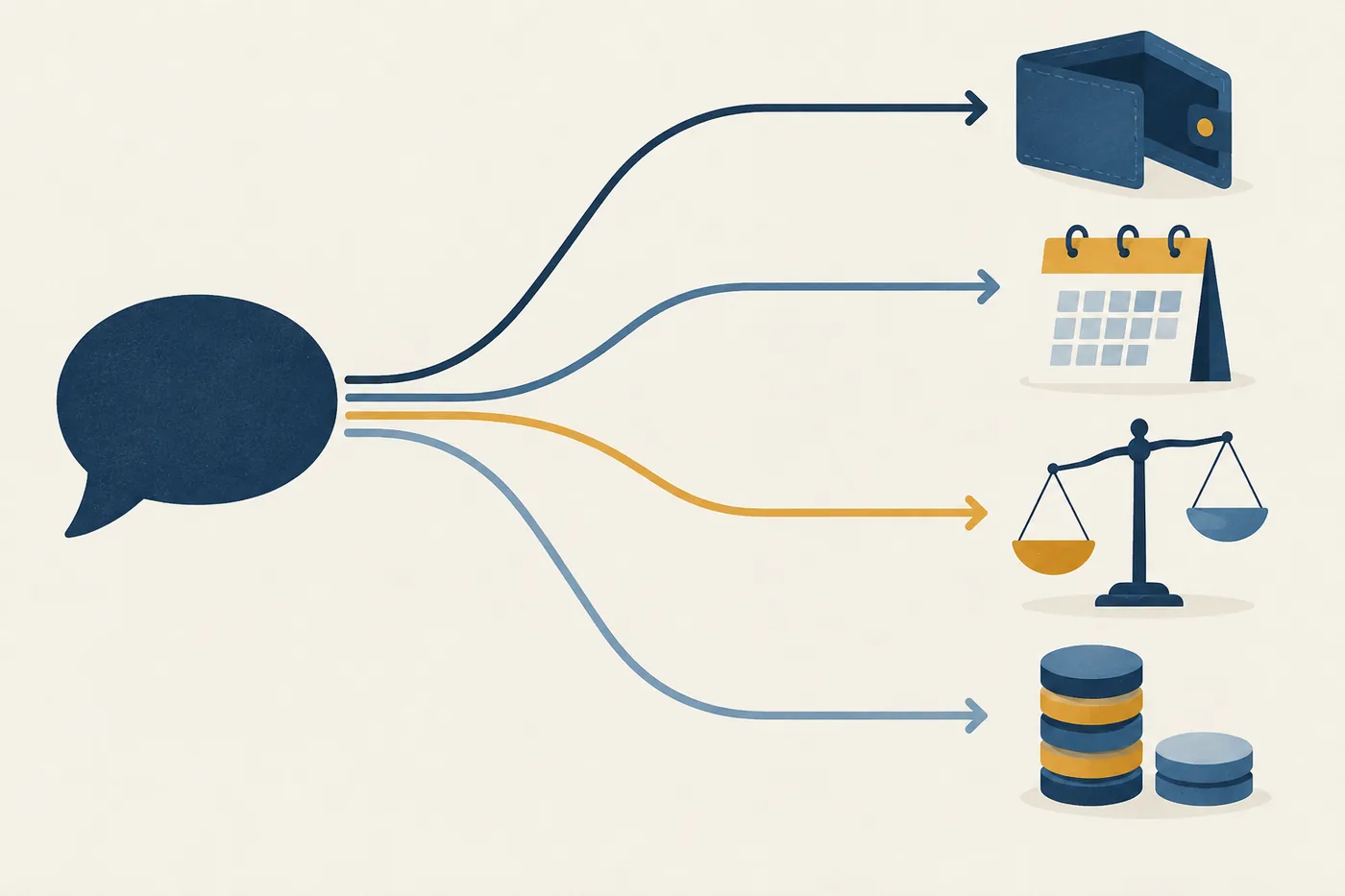
"Too expensive" is a conclusion, not a reason. Underneath it sits one of four very different situations, and each one needs a different response.
The buyer may genuinely have no budget. They may have budget but not for this quarter. They may have budget and think your product is fine but not worth what you are asking. Or they may want the product, want the price, and be testing whether you will fold. These four look identical when spoken. They are not remotely the same problem.
This is why a rehearsed discount is such an expensive habit. It answers exactly one of the four cases and damages the other three: you have just told a buyer who was willing to pay full price that your first number was fiction.
#Do not answer in the first ten seconds
The strongest move after a price objection is silence, then a question. Sales teams that study their own recordings find the same pattern again and again — the reps who close well talk less in the thirty seconds after the objection than the reps who do not.
The reason is mechanical. If you respond immediately you are responding to the sentence. If you wait and ask, you respond to the situation behind the sentence. Richardson's negotiation research makes the same point from the other side of the table: reps who negotiate before they have diagnosed are negotiating against themselves.
#Four responses that work
#Ask what it is expensive compared to
"Compared to what?" is the single highest-yield question in the whole category. The answer tells you whether you are being measured against a competitor, against last year's budget, against doing nothing, or against an internal build. Four completely different conversations follow, and you cannot pick the right one by guessing.
#Re-anchor on the cost of doing nothing
Most buyers price your product against zero. Zero is never the real alternative — the problem they described earlier in the call has a running cost, and that cost continues whether or not they buy. Bring their own numbers back: the hours their team described, the deals they said were slipping, the headcount they were about to add.
#Isolate the objection
"If the price were right, is there anything else that would stop us moving forward?" This does two things. It tells you whether price is the real blocker or the polite one, and it gets the rest of the objections on the table before you have spent your only concession. Highspot's objection-handling playbook treats isolation as the step most reps skip, and it is the step that stops a discount from buying you a second objection.
#Trade, never discount
If a concession is genuinely needed, it is exchanged, not given. A longer term, a case study, an earlier start date, a multi-team rollout, a faster payment schedule — all of these are worth real money to your side. A price that moves for free teaches the buyer that it will move again at renewal.
#When the budget genuinely is not there
Sometimes the honest answer is that they cannot afford it. Keeping that deal alive by cutting the product until it fits is how customers end up churning, because you sold them something that no longer solves the problem they had.
Two responses are defensible. Scope down deliberately — a smaller, real deployment that solves one problem completely and can grow. Or agree a date and go away, with the trigger written down: the budget cycle, the hire, the renewal of the tool they are replacing. SBI's analysis of price objections is blunt about the third option, which is to walk, and about how much pipeline hygiene improves when reps use it.
#How to practise this before the call
Nobody improves at a price objection by reading about it. The skill is verbal and it is under pressure, which means it has to be rehearsed out loud. The cheapest version is a peer who plays a difficult buyer for ten minutes a week. The version that scales is a roleplay tool that puts a rep in front of the same objection repeatedly until the pause stops feeling unnatural, with each turn graded as it happens rather than reviewed a week later.
Either way, the thing being trained is the first ten seconds. Everything after that is technique the rep probably already knows.
#Limitations and what to watch
Scripts help, but a script read as a script is worse than no script at all — buyers hear it immediately. Treat everything above as a shape to improvise around, not lines to recite.
Note too that the four-cause model is a diagnostic aid, not a rule of nature. Some objections are a mixture, and some are political: the person on the call may be relaying a price objection raised by somebody who is not there. In that case your job is not to handle it but to arm your champion to handle it without you — which means the objection, and who raised it, belongs on the deal record rather than in your head.
#Key takeaways
- "Too expensive" is a conclusion; find which of the four causes produced it before answering.
- The highest-yield response to a price objection is a question, not a number.
- Isolate the objection before conceding, or your discount buys you the next objection.
- If a concession is needed, trade it for something — a term, a reference, a start date.
A price objection is not the end of the conversation, it is the beginning of the real one. Work out which of the four things the buyer actually means, answer that, and keep your pricing intact. Pick one live deal this week, rehearse the first ten seconds out loud, and compare how the next call goes.
#FAQs
How to overcome price objections in sales?
Diagnose before you answer. Ask what the price is expensive compared to, re-anchor on the cost of doing nothing, isolate whether price is the only blocker, and trade rather than discount if a concession is genuinely needed.
How should you handle objections during a sales call?
Pause, then ask a question rather than defending immediately. The pause gives you the situation behind the sentence; an instant answer only responds to the words.
What are the three golden rules for objection handling?
Do not answer in the first ten seconds, isolate the objection before conceding anything, and exchange every concession for something of equivalent value.
How do I handle a pricing objection politely?
Acknowledge it without agreeing or apologising, ask what it is being compared against, and bring the buyer's own stated costs back into the conversation. Politeness comes from curiosity, not from discounting.
Pick one live deal this week and rehearse the first ten seconds out loud before the call.
Start freeMore from the blog
AI Sales Roleplay vs Call Recording: Which Comes First?
One rehearses the call that has not happened, the other reviews the one that did. Where each wins, and which to buy first on a limited budget.

